



Why is graphene difficult to disperse? How to solve it?
Jun 17,2020
Why is graphene difficult to disperse? How to solve it?
CurrentlyGrapheneAll kinds of synthesis technologies have matured, the key is that graphene materials are difficult to disperse in other matrices, which is a difficulty that restricts its large-scale application. Without large-scale applications, graphene has no momentum for development. Why is graphene difficult to disperse and how to make graphene compatible with other materials?
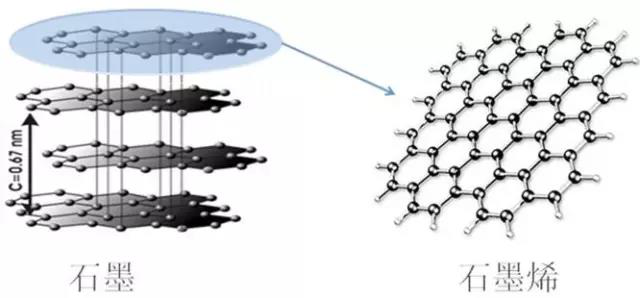
At present, all kinds of synthesis technologies of graphene have been mature, and the key is that graphene materials are difficult to disperse in other matrices, which is a difficulty restricting its large-scale application. Without large-scale applications, graphene has no momentum for development. Why is it difficult to disperse graphene? This is due to its special structure, the specific reasons are as follows:
1Sheet structure
Graphene is a typical sheet structure, especially the thickness of graphene produced by chemical vapor deposition method is very thin. In the composite process, it is easy to cause the wrinkle of the sheet structure, and even the shape of the variable range, which destroys the characteristics of the sheet structure., Can not achieve the desired modification effect. Especially the adoptionCVDThe graphene film produced by the method has stronger sheet structure characteristics.
2, intermolecular force
The van der Waals force between the single-layer graphene layer is very large, and foreign substances and external forces are difficult to open, so it is difficult to disperse in the polymer. Various methods should be used to reduce the van der Waals force between molecules. The main method is to increase the number of graphene layers, and the size of single-layer graphene is less1Nano, the specific surface area is too large, it is easy to aggregate, the general size reaches10Layer (5Nano) above the van der Waals force will be weakened, foreign materials can be opened, added to the composite material can be dispersed. But the number of layers to reach10Above the layer, it has become graphene sheets, and many modification functions cannot be brought into play.
The graphene produced by the redox reaction is oxidized by a strong oxidant inGrapheneOxidation groups are generated between the layers, which reduces the intermolecular force, and the dispersion of graphene is greatly improved compared to other methods.
3Compatibility issues
Graphene materials have few functional groups in the molecular structure, and the compatibility between pure graphene and polymer is not good.
Through the previous analysis, it can be clearly seen that the biggest bottleneck restricting the application of graphene is dispersion. For example, to improve its dispersion in polymers, the following methods are often used:
01Mix Add
Adopt flake/Spherical materials are mixed to facilitate dispersion, such as graphene./Barium sulfate, graphene/Glass beads, etc.
02Surface treatment
Graphene is a stable compound composed of carbon element six-membered ring, showing chemical inertness, but the oxidation-reduction method graphene introduces hydrophilic groups at the edge of the sheet, which can be modified by surface functionalization.
(11) Surface grafting treatment :
Surface functionalization of graphene can be achieved using reagents such as isocyanates, silane coupling agents, organic amines, diazonium salts, etc. The single-layer graphene is grafted with functional groups, which can greatly reduce the van der Waals force between molecules, not only make the single-layer dispersion easy, but also improve the compatibility with the polymer, and can be made into a uniformly dispersed graphene polymer composite material.
For example the reaction of graphene suspensions with isocyanates in the presence of nitrogen24In hours, the isocyanate can react with the edge hydroxyl or carboxyl groups of the redox reaction graphene sheet to generate amide or carbamate. As another example, graphene oxide in the presence of butylamine and toluene, three-Aminopropyl triethoxy silane reacts with the hydroxyl groups on graphene to generate silicon-oxygen bonds, and the functionalized graphene can be dispersed in water, ethanol,DMF,DMSO,APTSIn.
(22) Surface plasma treatment: The treatment was carried out using carbon tetrafluoride plasma.
(32) Surfactant treatment: Such as polyvinylpyrrolidone (PVP), sodium dodecyl benzene sulfonate (SDBS)Sodium lignosulfonate (SLS), polyvinyl alcohol (PVA), polyethylene oxide, polyacrylic acid, polymethacrylic acid, polyacrylamide, etc.
(42) Surface treatment with silane coupling agent: As with silaneKH-560Processing.
03Add compatibilizer
Adding functional groups such as maleic anhydride dielectric polymer materials can effectively improve the compatibility with the resin. Specific examples are as follows:
Graphene Functionalized with Phenyl Isocyanate1%AddPSand then reduced with dimethylhydrazine, the conductivity of the composite reached0.1S/cm. The graphene is first made into a masterbatch, inPCAdd in3%The percolation value can be reached, and the conductivity reaches1.2×10-4S/cm. While directly adding graphene microsheets, the seepage value is as high9%.
04in-situ treatment technology
(12) Solution coating
For graphene synthesized by the solution method, both the synthesis process and the final product are solutions. The in-situ polymer method can be used to add the powder to be coated to the reactor first, and during the reaction, the graphene of the size nano agent will react on the micron agent powder, preferably coated on the powder, and will not agglomerate. For example, Shenzhen Intrinsic Equation Graphene Co., Ltd. has coated metal copper, nickel, cuprous oxide, etc. in easy polymers. Coated copper can achieve the conductive effect of silver, and coated cuprous oxide can greatly improve its antibacterial effect.
(2) In-situ polymer
In the in situ solution method of polymer graphene at the same time, the polymer monomer such.PMMANylon6and the like are added together with the initiator while the polymerization reaction is carried out. (Author: Shenzhen Polymer Industry Association, Professor Wang Wenguang Senior Engineer)
Related News