



Ceramic Materials in the Bulletproof Sector
Sep 23,2024
Network
In everyone's impression, ceramics are fragile. But after modern technology processing, ceramic“Shake yourself into a change”It has become a hard, high-strength new material, especially in the material has special physical properties requirements.In the bulletproof field, ceramics shine brilliantly and become a very popular bulletproof material.
01
Bulletproof Principle of Ceramic Materials
The basic principle of armor protection is to consume the projectile's energy, slow down the projectile and achieve harmlessness. Most traditional engineering materials, such as metal materials, absorb energy through plastic deformation of the structure, andCeramic materials absorb energy through a micro-crushing process.
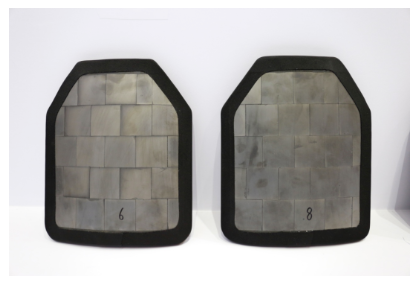
bulletproof ceramicenergy absorption processcan be roughly divided3Stages:
(11) Initial impact stage:The projectile hits the ceramic surface, dulls the warhead, and absorbs energy during the process of crushing the ceramic surface to form a small and hard fragment area;
(22) Erosion stage:The blunt projectile continues to erode the fragment area, forming a continuous layer of ceramic fragments;
(32) Deformation, crack and fracture stage:Finally, a tensile stress is generated in the ceramic to break the ceramic, and then the back plate is deformed, and the remaining energy is all absorbed by the deformation of the back plate material. Both the projectile and the ceramic were damaged during the impact of the projectile on the ceramic.
02
Requirements of Bulletproof Ceramics for Material Properties
Because of the inherent brittleness of the ceramic, it fractures upon impact with a projectile rather than deforming plastically. Under tensile loading, fracture first occurs at inhomogeneities such as pores and grain boundaries. Therefore, in order to minimize the microscopic stress concentration,Armored ceramics should have low porosity (up to theoretical density values.99%) And high-quality ceramics with fine grain structure.
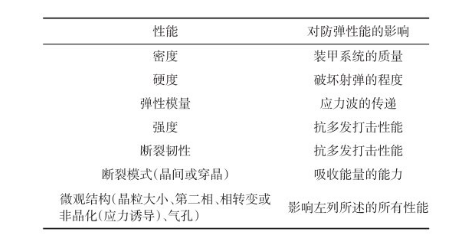
Material properties and their influence on bulletproof performance
03
The most commonly used bulletproof ceramic materials
From21Since the beginning of the 20th century, bulletproof ceramics have developed rapidly and have many types, including alumina, silicon carbide, boron carbide, silicon nitride, titanium boride, etc.alumina ceramic(Al₂O₃)Silicon Carbide Ceramics(SiC)Boron carbide ceramics(B4C)The most widely used.
alumina ceramicThe highest density, but the hardness is relatively low, the processing threshold is low, the price is low, according to the purity is divided85/90/95/99Alumina ceramics, the corresponding hardness and price also increased in turn.

Performance Comparison of Different Bulletproof Ceramic Materials
silicon carbide ceramicThe density is relatively low, the hardness is high, and it is a structural ceramic with high cost performance, so it is also the most widely used bulletproof ceramic in China.
boron carbide ceramicIn these kinds of ceramics, the lowest density, the highest hardness, but at the same time its requirements for processing technology is also very high, the need for high temperature and high pressure sintering, so the cost is also this3The highest in ceramics.
Comparing these three more common bulletproof ceramic materials,Alumina bulletproof ceramics have the lowest cost, but the bulletproof performance is far inferior to silicon carbide and boron carbide,Therefore, at present, the production units of bulletproof ceramics in China are mostly silicon carbide and boron carbide bulletproof, while alumina ceramics are rare. But...Single crystal alumina can be used to prepare transparent ceramics, which is widely used as a transparent material for optical function,It is applied to military equipment such as individual bulletproof mask, missile detection window, vehicle observation window, submarine periscope, etc.
04
Two of the most popular bulletproof ceramic materials
silicon carbide bulletproof ceramic
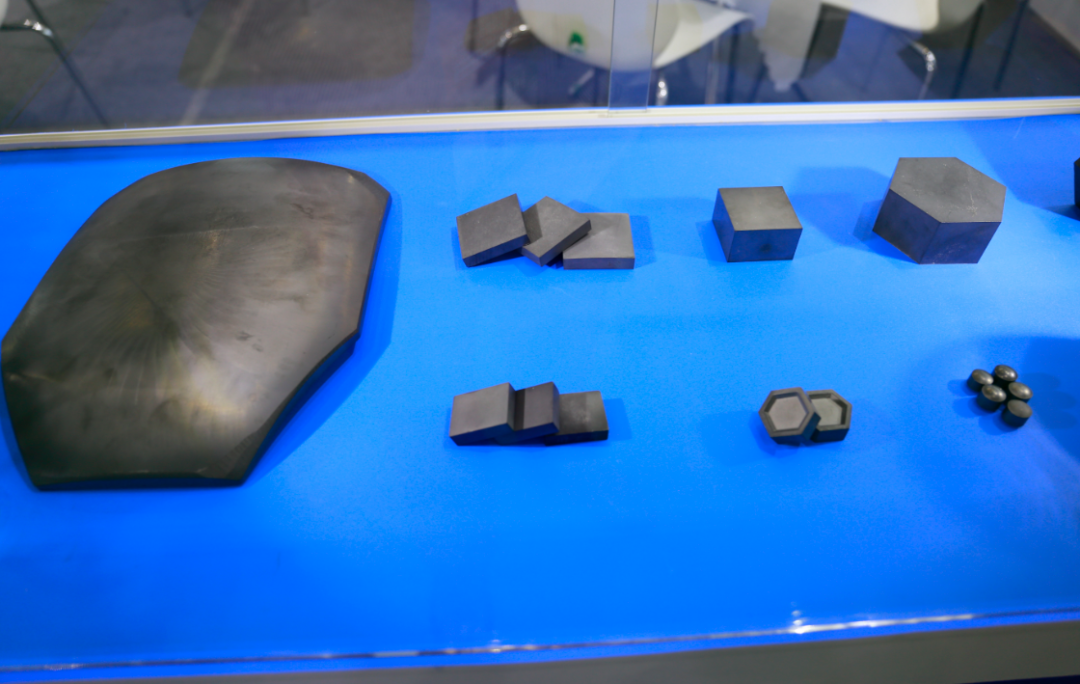
Silicon carbide covalent bonds are extremely strong and still have high strength bonding at high temperatures. This structural feature gives silicon carbide ceramicsExcellent strength, high hardness, wear resistance, corrosion resistance, high thermal conductivity, good thermal shock resistanceAt the same time, silicon carbide ceramic is one of the most promising high-performance armor protective materials with moderate price and high cost performance.
Silicon carbide ceramics in the field of armor protection has a broad space for development, inThe application of individual equipment and special vehicles tends to be diversified.As a protective armor material, taking into account the cost and special applications and other factors, usually a small arrangement of ceramic panels and composite back plate bonded into a ceramic composite target plate, in order to overcome the ceramic due to tensile stress caused by failure, and to ensure that the projectile penetration only shattered a single block without damaging the overall armor.
boron carbide bulletproof ceramics
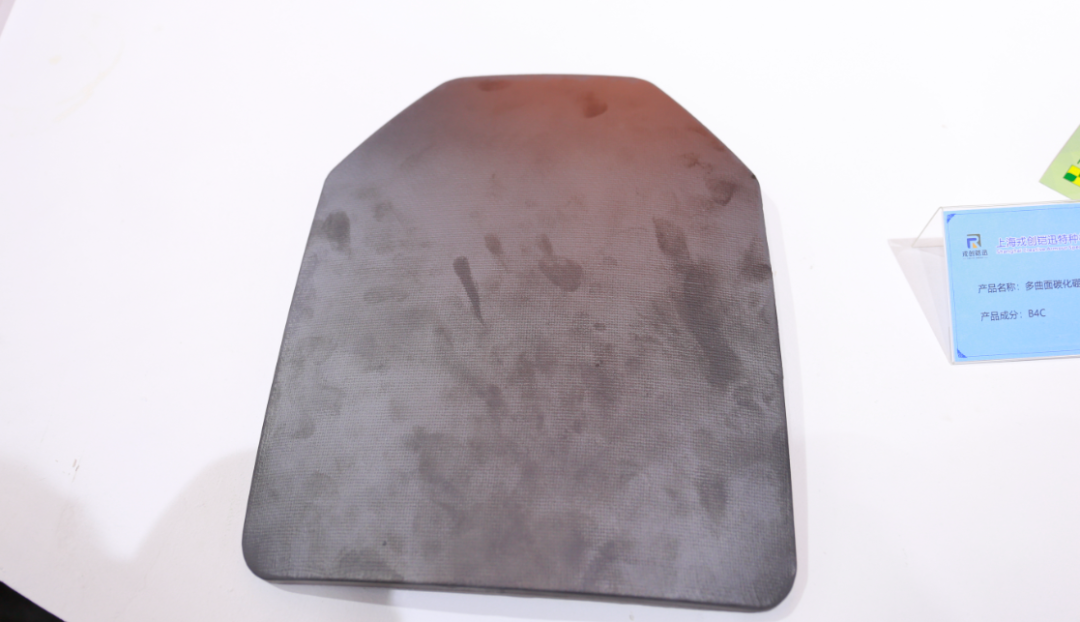
Boron carbide is a superhard material with hardness second only to diamond and cubic boron nitride in known materials,Hardness up3000kg/mm²; low density, only2.52g/cm³It is steel.1/3; high modulus of elasticity450GPa; high melting point, about2447 ℃; Its thermal expansion coefficient is low and its thermal conductivity is high. In addition, boron carbide has good chemical stability, acid and alkali corrosion resistance, and does not react with acid and alkali and most inorganic compound liquids at room temperature, only in hydrofluoric acid.-Sulfuric acid, hydrofluoric acid-There is slow corrosion in the nitric acid mixture; and it does not wet with most molten metals and does not act.Boron carbide also has a good ability to absorb neutronsThis is not available in other ceramic materials.B4CThe density is the lowest of several commonly used armor ceramics, coupled with a high modulus of elasticity, making it a good choice for military armor and space materials.B4CThe main problem is that it is expensive (is alumina10times), brittleness, limiting its wide application as a single-phase protective armor.

05
Preparation method of bulletproof ceramics
From the characteristics of the ceramic material preparation process can be seen, at present.The more mature process development is reaction sintering, pressureless sintering and liquid phase sintering., this3The production cost of the sintering method is low, the preparation process is simple, and the possibility of mass production is high. Hot pressing sintering and hot isostatic pressing sintering are relatively limited by the size of the product, the production cost is higher, and the maturity is lower. Ultra-high pressure sintering, microwave sintering, spark plasma sintering and plasma beam fusion method are the lowest in maturity and are relatively new preparation methods, but they have higher requirements for technology and equipment, and require high production costs. The feasibility of mass production is low, and they are often used in the experimental exploration stage. They are of little significance to practical applications and are difficult to realize industrialization.
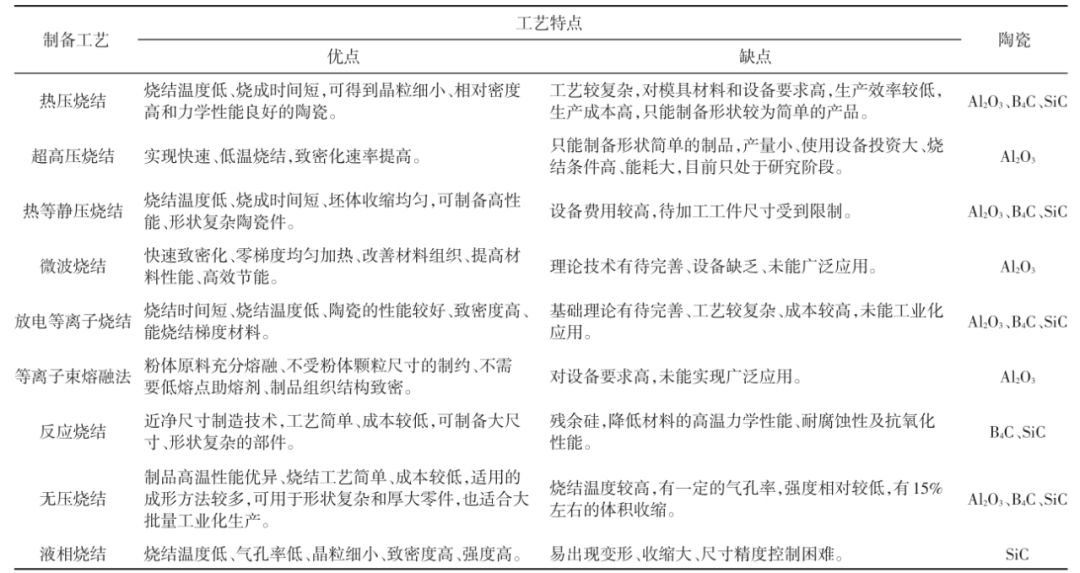
Preparation Technology of Typical Bulletproof Ceramics
06
Upgrade of bulletproof ceramics
Although the bulletproof potential of silicon carbide and boron carbide is very large, the problem of poor fracture toughness and brittleness of single-phase ceramics cannot be ignored. The development of modern science and technology has put forward requirements for the functionality and economy of bulletproof ceramics:Multi-function, high performance, light weight, low cost and safety.Therefore, in recent years, experts and scholars hope to realize the strengthening, lightweighting and economization of ceramics through micro-adjustment, including multi-ceramic system composite, functional gradient ceramics, layered structure design, etc., and such armor is lighter in weight than today's armor, which better improves the mobility of combat units.
Functionally graded ceramics are the regular changes in the properties of the component materials through microscopic design.Such as titanium boride and metal titanium and aluminum oxide, silicon carbide, boron carbide, silicon nitride and metal aluminum and other metals/Ceramic composite system, the performance along the thickness of the gradient change, that is, the preparation of high hardness transition to high toughness bulletproof ceramics.
Nano composite ceramic is a composite ceramic which is composed of sub micron or nano scale dispersed particles added to the matrix ceramic.SuchSiC-Si3N4-Al2O3,B4C-SiCThe hardness, toughness and strength of ceramics are improved to a certain extent. According to reports, Western countries are studying the sintering of nano-powder to prepare ceramics with a grain size of tens of nanometers to achieve material strengthening and toughening. Bulletproof ceramics are expected to achieve a major breakthrough in this area.
07
Summary
Whether it is single-phase ceramics or multi-phase ceramics,The best bulletproof ceramic material is still inseparableSilicon Carbide Sintering Furnace,boron carbide sintering furnaceThese two materials.Especially boron carbide materials, with the development of sintering technology, the excellence of boron carbide ceramics is becoming more and more prominent, and the application in the bulletproof field will be further developed.
Previous article
Next article
Related News