



Advantages and classification of fuel cells
May 13,2024
Fuel cells are electrochemical devices that convert chemical energy into electrical energy. They can generate electricity without combustion and emit no pollutants. The fuel of the fuel cell may be hydrogen, natural gas, methane, methanol, ethanol, etc., and the oxidant is always air, except in very special cases where it may be pure oxygen (e. g. space applications).
The fuel cell is mainly composed of four parts: anode, cathode, electrolyte and external circuit. Through oxidation-reduction reaction, the energy conversion from chemical energy to electric energy is completed: the reactant of anode generates positively charged hydrogen ions through oxidation reaction and releases electrons. The electrons flow through the external circuit from the anode to the cathode and are absorbed. The cations reach the cathode through the electrolyte and undergo reduction reaction with the cathode to generate water and carbon dioxide, the anion and the anode react to generate ions that migrate in the electrolyte, and electrons flow through an external circuit, thus forming a circuit to generate current. It is called an electrochemical generator because its reaction does not require conditions such as combustion.
In the process of use, chemical energy-The conversion rate of electric energy is about 50% ~ 80%, which is more efficient than traditional power generation technology. The fuel source of fuel cell is not limited, the product is pollution-free, and its wide use and popularization can reduce the dependence on traditional fossil fuels. Because of its good performance and high pollution-free efficiency, it has attracted the attention of many researchers. In the future, fuel cells are expected to be widely used in industrial, commercial, residential power generation, mobile power and other fields. Fuel cells have many advantages over conventional power generation devices.
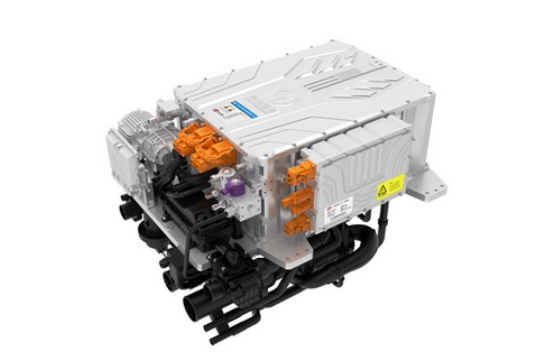
Fuel Cell System (Source: Guohong Hydrogen Energy)
Advantages of Fuel Cells
Fuel Cell
(11) Small environmental pollution
The main product of fuel cells is water, and when natural gas is used as fuel, only water is the product, and carbon dioxide emissions are lower than traditional power generation devices.About 40%, which plays a very important role in alleviating the greenhouse effect. The fuel of the fuel cell is desulfurized before the reaction, and there is no combustion process in the electrochemical reaction process, so it will not produce dust pollutants such as SO2 and NOx, which reduces the pollution to the environment. It is an environmentally friendly energy device.
(2) High power generation efficiency
Because it is not limited by the Carnot cycle, the fuel cell energy conversion rate is extremely high in theory, but due to the occurrence of various polarization phenomena in the reaction process, the energy conversion rate is affected, so the energy conversion rate of the fuel cell in the actual use process is45% to 60%. However, compared with the energy conversion efficiency of 30% to 40% of traditional power generation methods, the efficiency of fuel cells is also considerable.
(3) Low noise
Due to its simple structure, the fuel cell does not need mechanical parts to operate during operation, so the noise during operation is very low and will not cause noise pollution to the environment.
(4) Wide range of fuels
Generally, fuels containing hydrogen (methane, ethane, alcohol) can be used as a source of energy for fuel cells, and these fuels can be obtained by collection or artificial synthesis. This reflects the characteristics of its wide and easy access to fuel sources.
(5) High reliability
The fuel cell has a low requirement for the stability of the load power. When the load changes, the fuel cell can still work stably and is not affected, so the fuel cell can be applied to the emergency power supply.
Classification of fuel cells
Fuel Cell
According to different application scenarios, technicians have developed various types of fuel cells according to different structures or working principles. Fuel cells have a variety of different classification methods: according to the different operating temperature, fuel cells can be divided into low-temperature fuel cells, medium-temperature fuel cells, high-temperature fuel cells and ultra-high-temperature fuel cells; according to the difference between electrolytes, Fuel cells can be divided into proton exchange membrane fuel cells (PEMFC), alkaline fuel cell (AFC), phosphoric acid fuel cell (PAFC), molten carbonate fuel cell (MCFC) and solid oxide fuel cell (SOFC). According to the level of technological development, it can be divided into the first generation fuel cell, the second generation fuel cell, the third generation fuel cell and the fourth generation fuel cell.
(1) Alkaline fuel cell
Alkaline fuel cells belong to the first generation of fuel cells, and the electrolyte isKOH solution, the electrode material is carbon material. In order to meet the needs of aerospace power, alkaline fuel cells were first proposed and developed. Its working temperature is only about 70 ℃, so the starting speed is faster, and it also has the advantages of low pollution and low environmental noise. Because of the low ionization density, its power generation is low, and it also has the following disadvantages: short life, strong corrosion, and high manufacturing cost.
(2) Phosphoric acid fuel cell
Phosphoric acid fuel cell also belongs to the first generation fuel cell, the electrolyte is liquid phosphoric acid, the skeleton is carbon material, and the fuel is hydrogen, natural gas, methanol, etc. The development of phosphoric acid fuel cell technology is relatively mature and has been applied to power plants and bus power supply systems.PAFC has the advantages of fast reaction, high tolerance to impurities and simple structure. PAFC has some disadvantages: lower efficiency than other fuel cells, high operating temperature (about 150~200 ℃).
(3) Molten carbonate fuel cell
The molten carbonate fuel cell belongs to the second generation of fuel cells, the electrolyte is molten carbonate, the electrode is a porous ceramic cathode and a porous metal anode, and the electrolyte diaphragm is a porous ceramic electrolyte diaphragm. Its energy conversion rate is high, about.55% ~ 65%, mainly used in fixed power stations. The advantages of the molten carbonate fuel cell: the power of the single cell is large, the reaction speed is fast, the cost is low, and the purity of the fuel is low. Molten carbonate fuel cells also have some disadvantages: high operating temperature (about 600~700 ℃) and the resulting difficulty in liquid electrolyte management, low power density, large volume, low battery life and so on.
(4) Solid oxide fuel cell
The solid oxide fuel cell belongs to the third generation fuel cell, which has the same structure as the general fuel cell, but it is composed of ceramics and is an all-solid structure. Solid fuel cells are mainly used in hybrid power generation in power plants, which have the following advantages: simple equipment, safe structure, no need for precious metal catalysts, wide range of fuel options, low noise, etc. Solid oxide fuel cells also have some disadvantages: high operating temperature (800~1000 ℃), long start-up time, etc.
(5) Proton exchange membrane fuel cell
The proton exchange membrane fuel cell belongs to the fourth generation fuel cell. The electrolyte is a polymer material proton exchange membrane. The electrode is composed of a gas diffusion layer and a catalyst layer. The gas diffusion layer is composed of a base material and a microporous layer. The catalyst layer is The electrode material is supported by carbon black or graphite, and the fuel is hydrogen, natural gas, methane, etc. Compared with previous generations of fuel cells, proton exchange membrane fuel cells have the following advantages: high energy conversion efficiency and power density, non-corrosive electrolyte, work at room temperature, and fast start-up speed. Of course, it also has certain disadvantages: the catalyst is expensive, right.CO sensitive, need to humidify reactants, etc. Proton exchange membrane fuel cell is a relatively mature battery technology in fuel cells, which is widely used in aerospace, military and new energy vehicles.
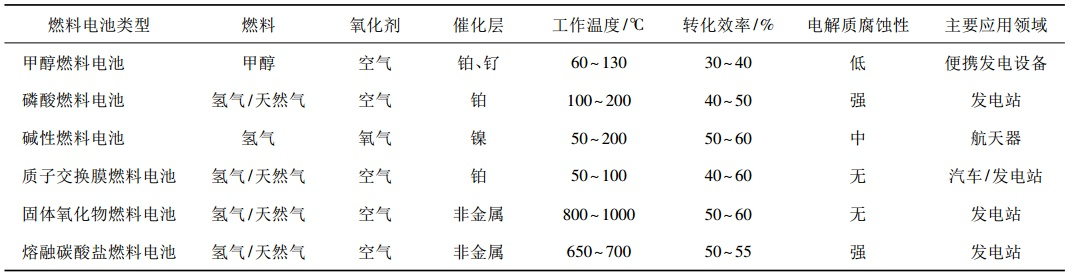
(Source: Yin Zhuocheng et al.:Research status and prospect analysis of key technologies of hydrogen fuel cell vehicles)
Source: Li Mengjia: Hydrophobic modification of carbon paper and its properties, Tianjin University of Technology.
Related News