



Application and Technical Analysis of Silicon Carbide (SiC) Semiconductor Power Devices in New Energy Vehicles
Mar 31,2024
Network
Silicon carbide has excellent electrical properties such as high pressure resistance, high temperature resistance, high frequency, and radiation resistance. It breaks through the physical limitations of silicon-based semiconductor materials and becomes the third-generation semiconductor core material. The performance advantages of silicon carbide materials lead the new changes in power devices.
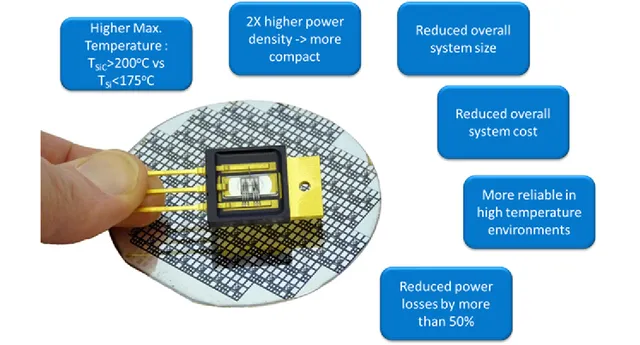
The role of power devices is to achieve the processing, conversion and control of electrical energy. Power devices made of silicon carbide substrate compared to silicon-based power The device has the advantages of high pressure resistance, high temperature resistance, low energy loss and high power density. Power modules are miniaturized and lightweight. Silicon carbide base of the same specificationCompared with the silicon-based MOSFET, the size of the MOSFET can be greatly reduced to 1/10 of the original, and the on-resistance can be reduced to at least 1/100 of the original. The total energy loss of silicon carbide-based MOSFET with the same specification can be greatly reduced by 70% compared with silicon-based IGBT.
Silicon carbide power devices are mainly used in the electric drive electronic control system of new energy vehicles. Power semiconductor devices, silicon carbide power devices have many obvious advantages in voltage resistance, switching loss and high temperature resistance, which help to realize the lightweight and high efficiency of the power electronic drive system of new energy vehicles. It is widely used in the main drive inverter of new energy vehicles,OBC, DC/DC converter and off-board charging pile and other key electric drive control components.
Major mainstream new energy vehicle manufacturers actively layout silicon carbide models.
Silicon carbide devices are used in on-board charging systems and power conversion systems, which can effectively reduce switching losses, increase the extreme operating temperature and improve system efficiency.20 automobile manufacturers use silicon carbide power devices in on-board charging systems; silicon carbide devices are applied to new energy vehicle charging piles, which can reduce the volume of charging piles and increase charging speed. The application of SiC in new energy vehicles will greatly reduce the weight of the vehicle under the premise of ensuring the strength and safety performance of the vehicle, effectively increase the cruising range of the electric vehicle by more than 10%, and reduce the volume of the electronic control system by 80%.
The silicon carbide market space for DC fast charging piles is expected to increase significantly in the future. Because of the cost of the original Because the proportion of silicon carbide devices currently used in DC charging piles is still relatively low. But by configuring carbon Silicon power devices, DC fast charging pile can greatly simplify the internal circuit, improve charging efficiency, Reduce the volume and cost of the radiator, reduce the overall size and weight of the system. WithThe application of 800V fast charging technology, DC charging pile silicon carbide market is expected to grow at a high speed.
With the rapid development of technologies such as electric vehicles and intelligent driving, the demand for semiconductor power devices in the automotive industry is increasing. The third generation of semiconductor power devices, such as silicon carbide (SiC) and gallium nitride (GaN) devices, with their excellent performance such as high efficiency, high frequency and high temperature, have gradually become the new darling of the automotive industry.
Characteristics of 1. Third Generation Semiconductor Power Devices
Compared to traditional silicon (Si) Semiconductor materials, third-generation semiconductor materials such as SiC and GaN have many advantages:
Higher energy efficiency:The third-generation semiconductor power devices have lower on-resistance and higher switching speed, thereby achieving higher energy efficiency and reducing energy consumption.
Higher operating frequency:Because the third-generation semiconductor materials have higher electron saturation speed and lower input capacitance, their operating frequency can reach tens of MHz or even higher, far exceeding traditional silicon semiconductors.
Higher temperature stability: The third-generation semiconductor materials have higher thermal conductivity and wider band gap, so that they can work stably at higher temperatures.
Smaller size:Due to the high frequency characteristics of the third generation semiconductor power devices, the size of the magnetic components and capacitors can be reduced, thereby achieving a more compact power supply design.
Combining the above advantages, under the same power level, the number of power devices in the equipment, the volume of the radiator, and the volume of the filter element can be greatly reduced, and the efficiency is also greatly improved.
Back here, what is the key role of these advantages of silicon carbide in the field of electronic vehicles?
The emergence of silicon carbide can ease the balance between the weight and durability of electric vehicles to a certain extent. In the power control unit, the silicon carbide device can make the battery lighter, longer and stronger. The silicon carbide device can shorten the charging time.
With the improvement of the penetration rate of new energy vehicles, the application and status of silicon carbide in electronic vehicles are getting higher and higher. The automobile industry is an important pillar industry of the national economy and plays an important role in the national economy and social development. With the sustained and rapid development of China's economy and the acceleration of urbanization, the demand for automobiles will continue to grow for a long period of time in the future, and with the improvement of the penetration rate of new energy vehicles, the application and status of silicon carbide in electronic vehicles are getting higher and higher.
Similar to the pursuit of higher-performance processors for mid-to-high-end mobile phones, silicon carbide can not only improve the energy conversion efficiency of new energy vehicles, but also increase the overall cost of the car, but higher prices will cover this part of the cost. Therefore, in order to obtain more industry profits, the high-end cars of various manufacturers will also be equipped with silicon carbide equipment.
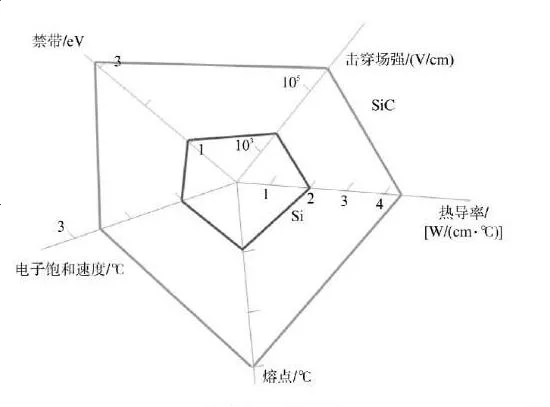
Due to the silicon carbide (SiC) materials and other characteristics, SiC MOSFET belongs to the third generation of wide band gap power semiconductors. Compared with the second generation of power semiconductors based on Si materials, SiC MOSFET has obvious advantages. It greatly reduces the loss in terms of on-resistance, switching, etc., and is suitable for higher operating frequencies. In addition, due to its high-temperature operating characteristics, it greatly improves high-temperature stability. As shown in the figure (comparison of Sic and Si)
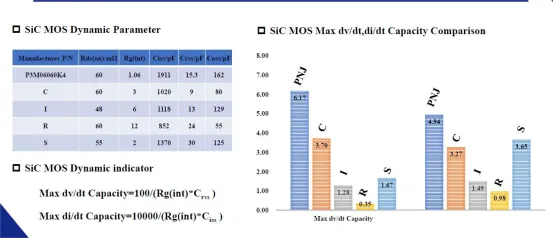
 However,Sic-MOSFET also has a fly in the ointment. In the practical application process, it can achieve faster switching speed and higher efficiency, but its fast switching speed puts forward higher requirements for the design of the drive circuit, especially the stray inductance of the whole system, which will cause greater EMC impact under the fast switching speed.
The same,Sic-MOSFET still have significant challenges in terms of electrical performance. Due to its faster response ability, it is easy to fluctuate the current and voltage.
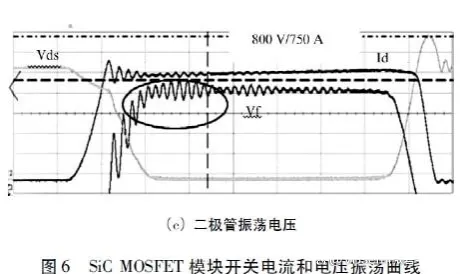
The following figure isSiCMOSFET module switch current and voltage oscillation curve, where (a) is the turn-on current oscillation, (B) is the turn-off voltage oscillation,(c) is the diode oscillation voltage, the peak control to 856V. From these three figures, it is clear that the electrical oscillations at the moment of SiCMOSFET switching are much more serious than IGBTs, and these characteristics are very challenging for automotive applications and EMC.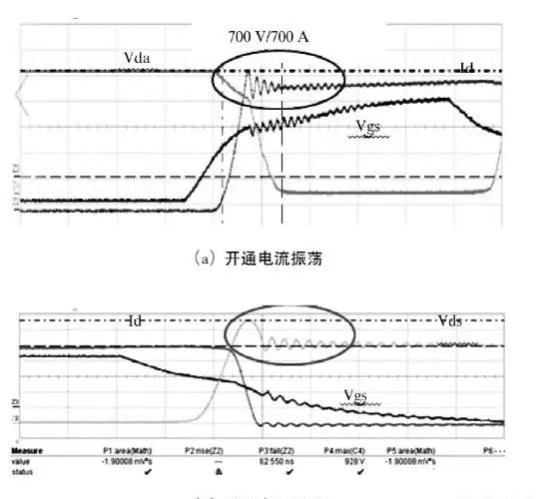
 Silicon carbide (SiC), also known as carborundum, is the semiconductor raw material of the third generation of compounds. Driven by the development of the new energy market industry, the efficient use and transformation of energy has led to the rapid development of the silicon carbide (SiC) industry market.
2. silicon carbide (SiC) Development of industrial market:
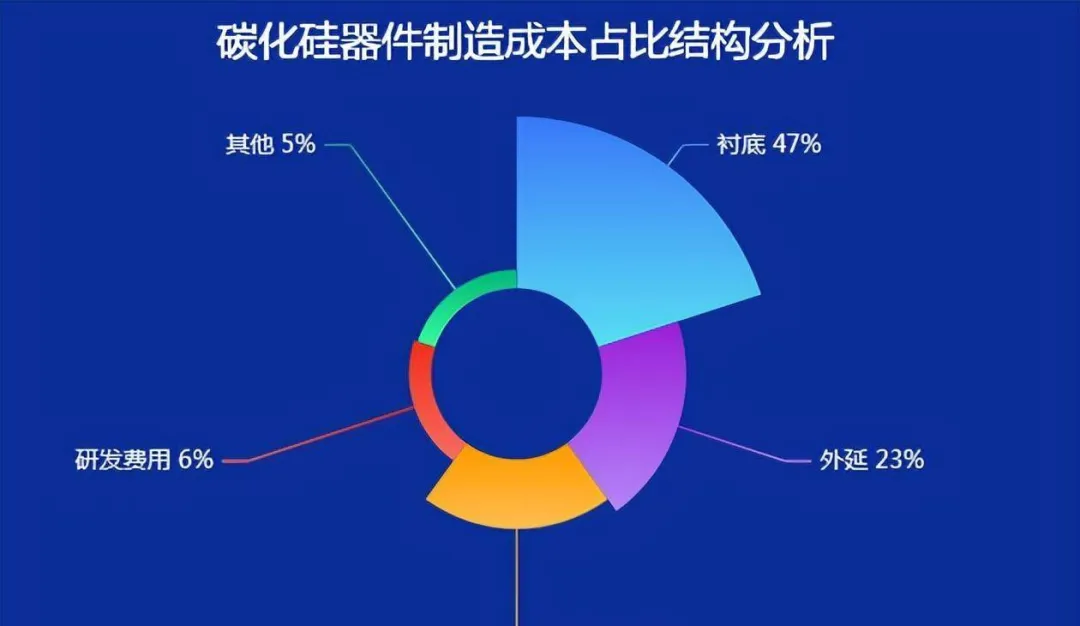
China Silicon Carbide (SiC) power device applications in new energy vehicles accounted for the first, up to 38%Through visual chart analysis, we can intuitively understand the silicon carbide (SiC) cost structure. In terms of its manufacturing cost structure, the substrate cost is the largest, followed by the epitaxial cost. It can be found that these two processes are the main links of industrial development, and their preparation is very difficult, and the technology and cost are also very high.
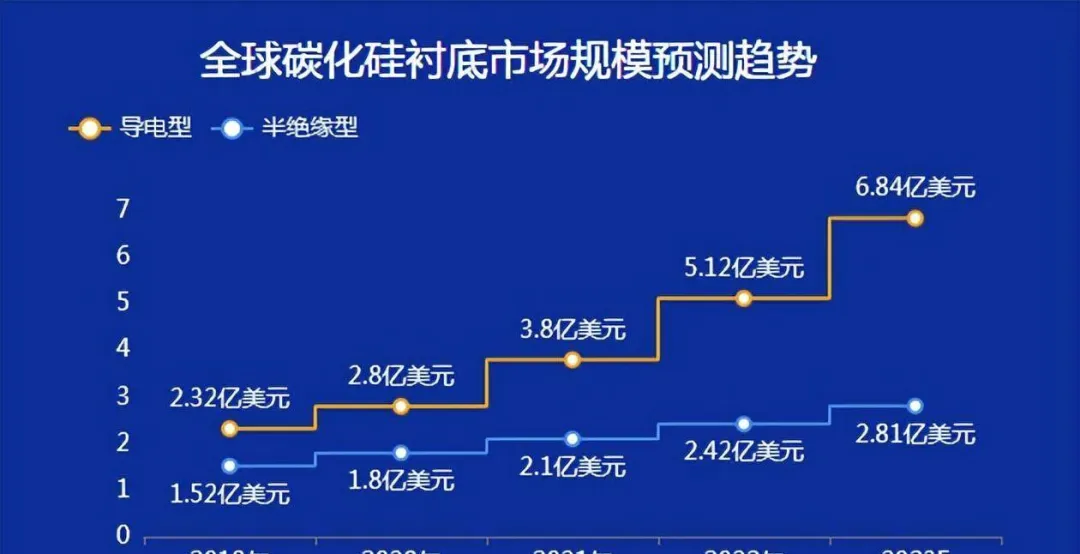
Silicon carbide (SiC) substrate, which is a semiconductor single crystal raw material composed of carbon (C) and silicon (Si), can be divided into two types: conductive and semi-insulating. The following shows the development trend of the global silicon carbide (SiC) substrate market size according to the network data. From the analysis of the chart, it shows a trend of rapid growth.
After analyzing the silicon carbide (SiC) substrate, let's analyze from another external angle, silicon carbide (SiC) epitaxial wafer, its price development trend?
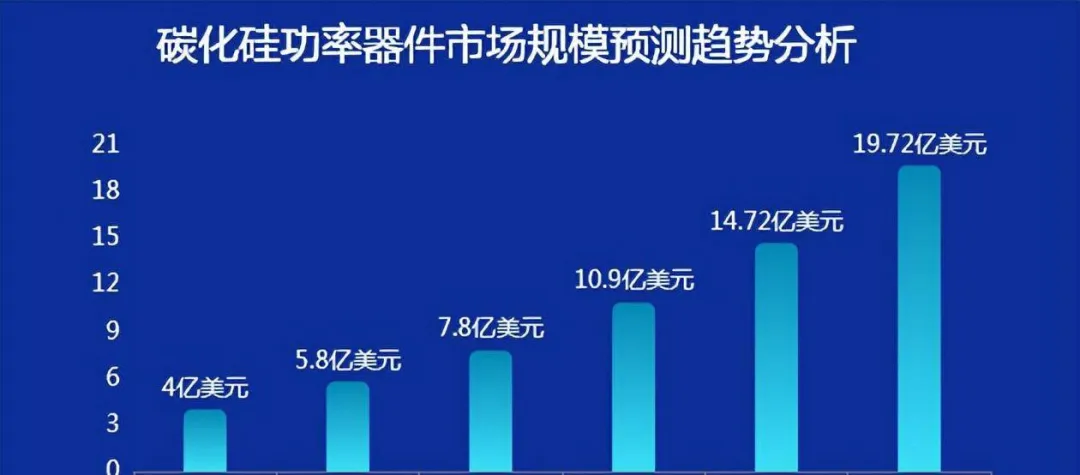
Silicon carbide (SiC) epitaxial wafer refers to a silicon carbide (SiC) wafer in which a single crystal thin film (epitaxial layer) with the same crystal as the substrate is grown on a silicon carbide (SiC) substrate. From the perspective of price analysis, silicon carbide (SiC) silicon carbide epitaxial wafers are still very expensive. However, with the decline in the price of silicon carbide (SiC) substrates, the price of silicon carbide (SiC) epitaxial wafers will also decline in the future.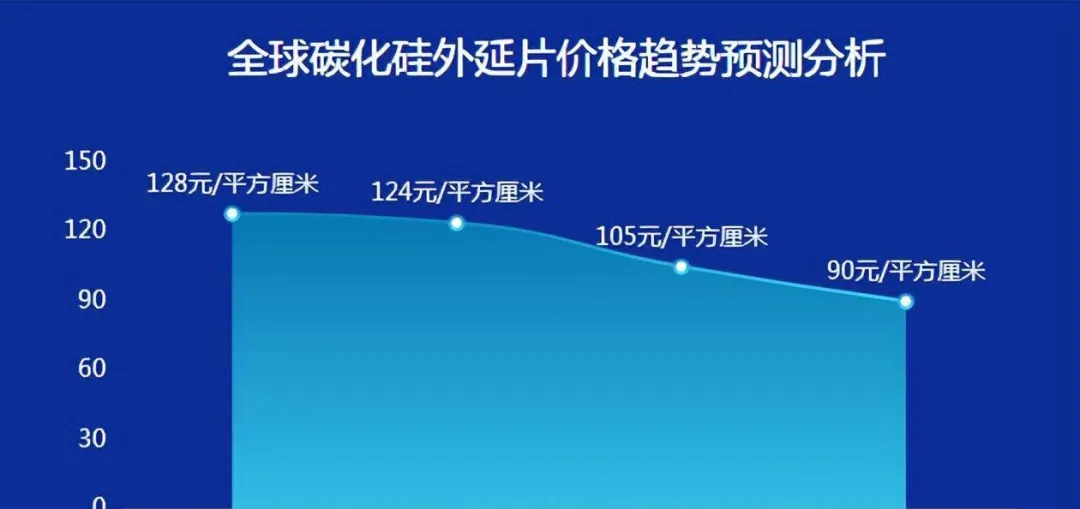 In addition, we will start from silicon carbide (SiC) power device market size to analyze, silicon carbide (SiC) power devices, its biggest feature is high voltage, high frequency, low consumption, etc., which is its unique advantage. It can maximize the efficiency of energy conversion. With technological breakthroughs and cost reductions, silicon carbide (SiC) power devices will be used on a large scale in different fields such as new energy electric vehicles and charging piles. According to the analysis of network data, the growth trend is also quite rapid.
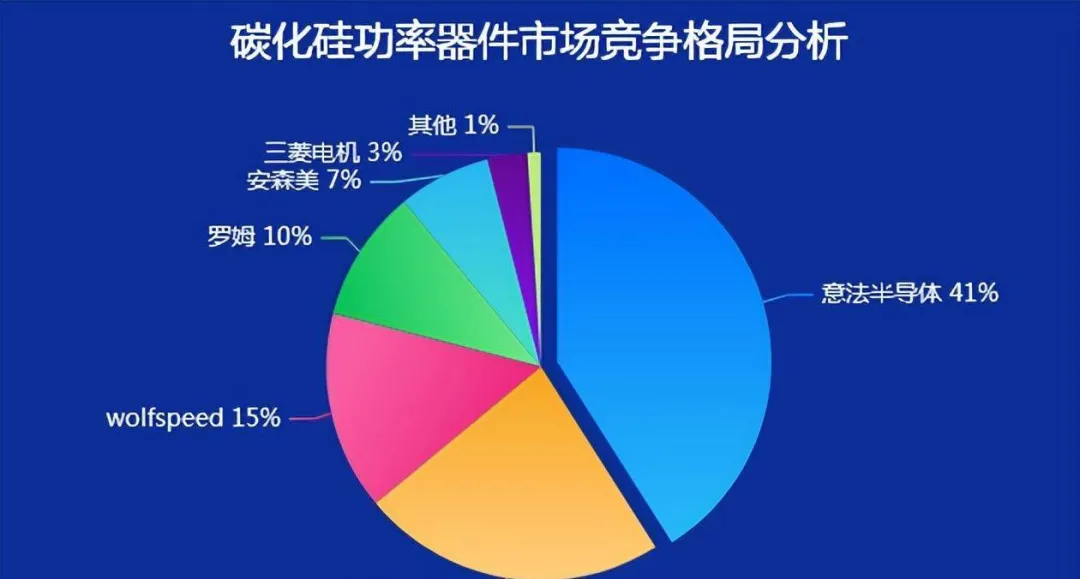
 With the silicon carbide (SiC) industry continues to develop, silicon carbide (SiC) power devices market size power devices market competition pattern has also occurred. But it is still mainly oriented to overseas giants. Below we can see through visual analysis. ST Semiconductor accounts for a relatively large proportion, exceeding 40%.
 At present, in China, silicon carbide (The application scale of SiC) is also growing. From the analysis, with the development of new energy industry and the development of new and different fields such as charging piles, the application of silicon carbide (SiC) power devices in China has been promoted.From the current application structure analysis, China's silicon carbide (SiC) power devices from the proportion of the situation, the application of new energy vehicles and consumer power supply is still dominant.
Application of 3. Third Generation Semiconductor Power Devices in Automotive Industry
electric vehicle drive systemIn the drive system of electric vehicles, the third-generation semiconductor power devices can be used in motor drivers, DC/DC (DC/DC) converters, chargers and other key links. Efficient SiC or GaN devices help increase the output power of the motor drive, reduce size and reduce heat loss, resulting in higher range and faster charging speed.Automotive Power Electronic System
Automotive power electronic systems, such as battery management systems (BMS), energy recovery systems (ERS), etc., can all benefit from the advantages of third-generation semiconductor power devices. For example, the use of high-efficiency GaN devices in BMS can reduce switching losses, improve battery charge and discharge efficiency, and extend battery life.car intelligent driving system
With the continuous development of automobile intelligent driving technology, such as automatic driving, vehicle networking, etc., the demand for high-speed and efficient semiconductor devices is also increasing. The third generation of semiconductor power devices are used in radar, laser radar (LiDAR), image processing and other key aspects of the application, can achieve faster data processing speed, lower energy consumption and higher reliability.Automotive Electronic Systems
Automotive electronic systems, such as in-vehicle infotainment systems, dashboards, climate control systems, etc., can also benefit from the advantages of third-generation semiconductor power devices. For example, in-vehicle infotainment systems, usingGaN power amplifier can achieve higher output power and wider frequency range, improve the quality of audio and video.New energy vehicle charging infrastructure
With the vigorous development of the new energy vehicle market, the construction of charging infrastructure has also become the key. The third generation of semiconductor power devices in the DC charging pileThe application of key components such as DC/DC converters and DC/AC inverters can help improve charging efficiency, reduce energy consumption, shorten charging time, and lay the foundation for the popularization of new energy vehicles.
4. silicon carbide semiconductor industry chain
The silicon carbide semiconductor industry chain mainly includes"Silicon carbide high purity powder, single crystal substrate, extension wafer, power device, module package, end application" and other links.
4.1 silicon carbide high purity powder
Silicon carbide high purity powder is usedThe purity of the product directly affects the growth quality and electrical properties of silicon carbide single crystals grown by PVT method.
Silicon carbide powder has a variety of synthesis methods, mainly solid phase method, liquid phase method and gas phase method3 kinds. Among them, the solid phase method includes the carbon thermal reduction method, the self-propagating high temperature synthesis method and the mechanical crushing method, the liquid phase method includes the sol-gel method and the polymer thermal decomposition method, and the gas phase method includes the chemical vapor deposition method, the plasma method and the laser induction method.
4.2 single crystal substrate
The monocrystalline substrate is a semiconductor support material, a conductive material, and an epitaxial growth substrate. The key step in the production of silicon carbide single crystal substrate is the growth of single crystal, which is also the main technical difficulty in the application of silicon carbide semiconductor materials, and is a technology-intensive and capital-intensive link in the industrial chain. at present,The SiC single crystal growth method includes a physical vapor transport method (PVT method), a liquid phase method (LPE method), a high temperature chemical vapor deposition method (HT-CVD method), and the like.
Comparison Table of Silicon Carbide Single Crystal Growth Methods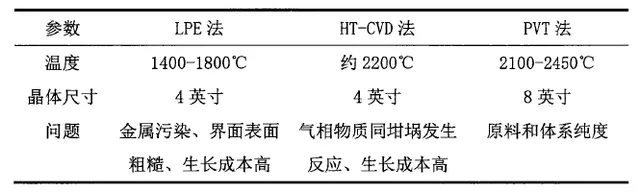
4.3 epitaxial wafer
Silicon carbide epitaxial wafer refers to a silicon carbide wafer in which a layer of single crystal thin film (epitaxial layer) with certain requirements and the same crystal orientation as the substrate is grown on a silicon carbide substrate. In practical applications, wide band-gap semiconductor devices are almost always made on the epitaxial layer, and the silicon carbide wafer itself is only used as the substrate, including.GaN epitaxial layer substrate.
At present, silicon carbide single crystal substrate onThe preparation of SiC thin films mainly includes chemical vapor deposition (CVD), liquid phase method (LPE), sublimation method, sputtering method, MBE method and so on. Among them, the CVD method is the main method for preparing high-quality silicon carbide crystal thin film materials and devices.
4.4 power device
The wide band gap power device made of silicon carbide material has the characteristics of high temperature resistance, high frequency and high efficiency. According to the working form of the device,SiC power devices mainly include power diodes and power switches. SiC power devices, like silicon-based power devices, are processed using microelectronic processes.
From the silicon carbide crystal material,4H-SiC and 6H-SiC are the most widely used in the field of semiconductors, of which 4H-SiC is mainly used for the preparationhigh-frequency, high-temperature, high-power devices, and6H-SiC is mainly used to produce power devices in the field of optoelectronics.
4.5 Module Package
Module packaging optimizes the performance and reliability of silicon carbide power devices during use, allowing the flexibility to combine power devices with different application scenarios.
At present, the relevant power device packaging type in the mass production stage basically follows the silicon power device. Common package types for silicon carbide diodesTO220 is the main type of silicon carbide MOSFET, and TO247-3 is the main type of common package, and a few use TO247-4, D2PAK and other new packaging methods.
4.6 terminal applications
Silicon carbide devices have the advantages of small size, high power, high frequency, low energy consumption, low loss, and high voltage resistance. Current main application areas: various power supplies and servers, photovoltaic inverters, wind power inverters, on-board chargers for new energy vehicles, motor drive systems, DC charging piles, variable frequency air conditioners, rail transit, military industry, etc.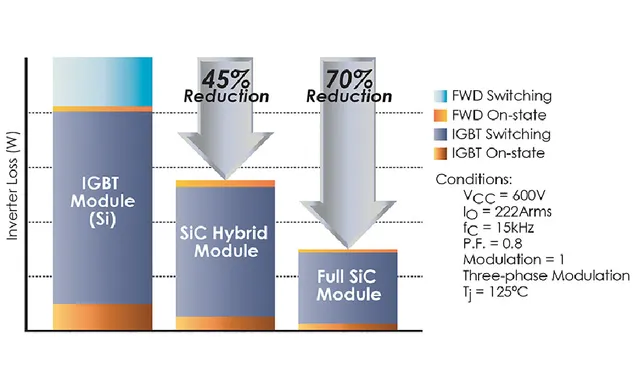
Current Problems in 5. Silicon Carbide Wide Band Gap Semiconductors
1. The preparation technology of large size SiC single crystal substrate is still immature.
Internationally, it has been developed.8 inch SiC single crystal samples, single crystal substrate size is still small, the defect level is still high. And the lack of more efficient SiC single crystal substrate processing technology; p-type substrate technology research and development is lagging behind.
ChinaThere are still the following problems in the field of SiC single crystal materials: SiC single crystal enterprises cannot provide high-quality 6-inch single crystal substrate materials for the 6-inch chip process line that has been/will be put into production in China; The testing equipment of SiC materials is completely monopolized by foreign companies.
2. The n-type SiC epitaxial growth technology needs to be further improved.
The market advantage of SiC power devices has not yet been fully formed, and it cannot shake the current dominant position in the silicon power semiconductor device market.
InternationalSiC device field: SiC power devices to the direction of large capacity development is limited; SiC device technology level is relatively low; lack of unified test evaluation standards.
ChinaThere are three gaps in the field of SiC power devices:(1) the research and development of SiCMOSFET devices is slow, only a few units have independent research and development capabilities, and the level of industrialization is not optimistic. (2) The main process equipment of SiC chips is basically monopolized by foreign companies, especially high-temperature ion injection equipment, ultra-high temperature annealing equipment and high-quality oxide layer growth equipment, etc. The key equipment used in the large-scale establishment of SiC process lines in China basically needs to be imported. (3)SiC device high-end testing equipment is monopolized by foreign countries.
4. The main problems of SiC power module at present:
(1) The use of multi-chip parallel SiC power module will produce serious electromagnetic interference and additional loss, which can not give full play to the excellent performance of SiC devices; SiC power module has large stray parameters and low reliability. (2) The development of SiC power high temperature packaging technology lags behind.
5. The driving technology of SiC power devices is not yet mature.
6. The application model of SiC devices can not fully reflect the physical characteristics of SiC devices.
6. Future Outlook
There is still much room for the application of third-generation semiconductor power devices in the automotive industry. WithWith the continuous optimization of SiC and GaN material manufacturing processes and cost reduction, these high-performance semiconductor devices will be widely used in more automotive electronics fields.
In addition, with more and more functions and higher integration of automotive electronic systems, the performance requirements for semiconductor devices will continue to increase. In the future, the third-generation semiconductor power devices are expected to make greater breakthroughs in higher frequency, higher temperature, and higher power, and further promote the innovative development of the automotive industry.
In short, the third-generation semiconductor power devices are more and more widely used in the automotive industry due to their excellent performance such as high energy efficiency, high frequency, and high temperature. From electric vehicle drive systems to intelligent driving systems, from automotive electronic systems to new energy vehicle charging infrastructure, third-generation semiconductor power devices are helping the automotive industry move to a higher level of technology.
Article from the network, if there is infringement please contact delete
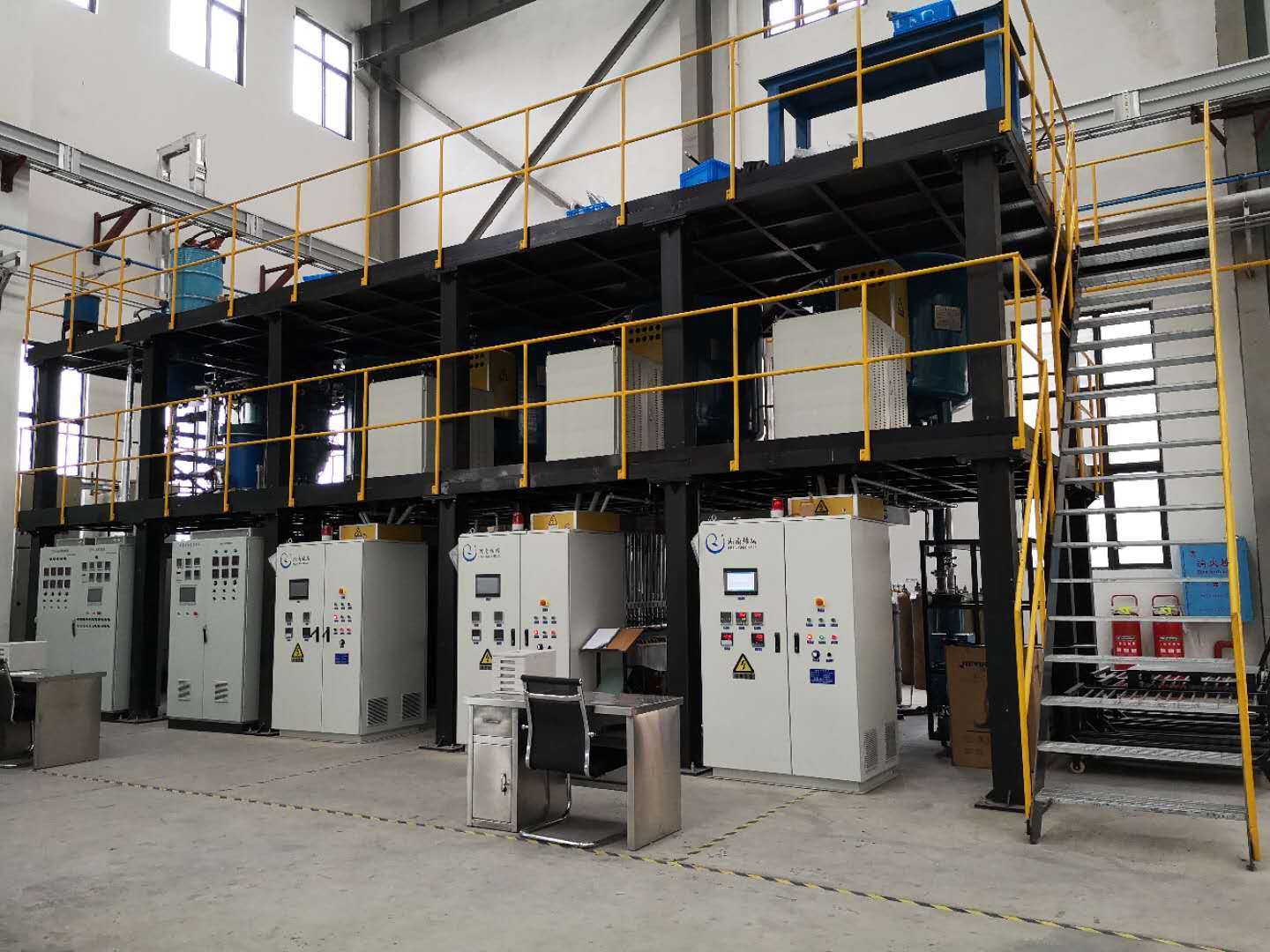
hunan ene rui automation equipment limited company specializing in the production of high temperature furnace equipment, graphitization furnace, carbonization furnace, sintering furnace, silicon carbide deposition furnace and other equipment
Previous article
Next article
Related News